Home NewAbout
MeLayout ArticlesArtwork FriendsLinks
General History Route Scenes Along the line Motive Power Track Plan Model Railroad Operations
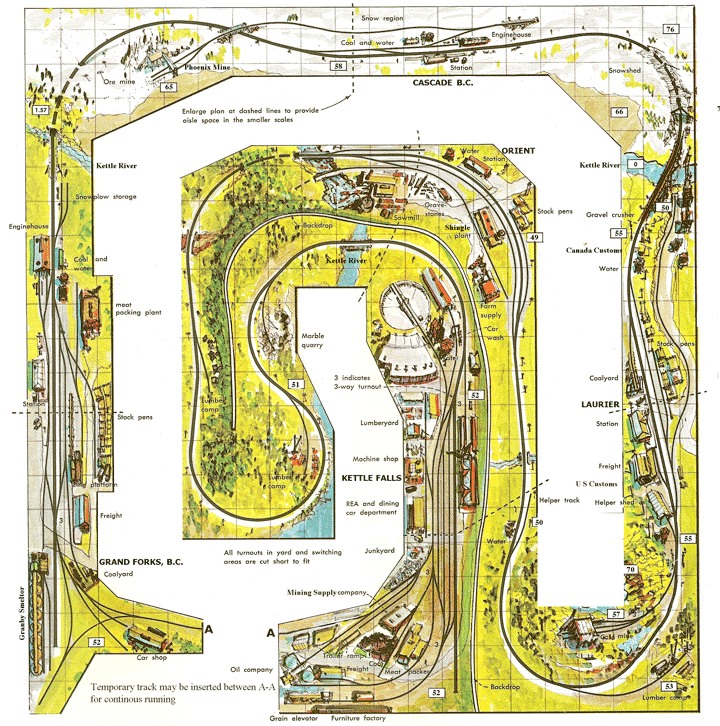
Since first visiting this part of Eastern Washington in the late sixties, I have really liked the Kettle Falls Branch. For modeling purposes I think the late forties or early fifties would make an idea layout geared toward switching. A Short Generalized History. The line has a rich history steming from the battle between Hill's Great Northern and Van Horne's Canadian Pacific and is well beyond the scope of this page. Here is a very brief synopsis. The first part GN's Kettle Falls branch was built in 1889 between Spokane and Colville by Daniel Corbin, as the Spokane Falls & Northern. It was completed to the border by 1892, the year the GN reached Spokane. Corbin built the Nelson and Fort Sheppard south from Nelson to connect with the SF&N in 1893. Corbin built a smelter at Northport, Wash to process the rich ores found near Nelson. In 1901 Jim Hill 'rescued' the line from Corbin. Also by 1901 Hill had gained control in Canada of the Vancouver, Victoria and Eastern whose charter permitted him to build west from the ore rich Kootanies to the Pacific coast. Hill began building his 'third mainline' towards Vancouver. By its completion in 1915 line would eventually cross the border at five points and came within yards of it at other places. It was called the VV&E in Canada and the Washington and Great Northern on the US side. Construction of the line began in 1901 at Marcus, the place on the SF&N where the Kettle River joined the Columbia. The new line followed the Kettle River between Marcus and Laurier,Wash first crossing into Canada. Between there and Danville, Wash the second crossing lay the BC town of Grand Forks in another area rich in precious metal ores. The large Grandby smelter was built there and Hill bought a significant interest in it. To the north several very rich mines were opened at Phoenix. The CPR reached the Phoenix first and began charging exorbiant rates. Soon thereafter Great Northern arrived on a line featuring much better grades and soon was hauling the majority of the Phoenix ores to the Grandby Smelter. Additional strikes were made to the south at Republic, Wash with the nearest smelter being the Grandby at Grand Forks. In 1900 Tracy Holland began building the Grand Forks & Kettle Valley to service the Republic mines. Unfortunately for him, Hill also was planning a railroad south from Grand Forks to Republic as part of the new line to the coast. As with Oregon's Descutes Canyon a decade later, a battle ensued. At one point Hill's crews layed a crossing through Holland's line in the middle of the night. In the morning, Holland had a locomotive parked on the crossing, blocking any further progress by Hill. Eventually, difficulties were resolved with both lines being built. Hill's line had the better route and took the lion's share of the traffic. Within a few years Holland's line, by then called the Grand Forks & Republic was abandoned. Half way between Grand Forks and Republic was a station called Curlew. From here Hill built north to to Ferry, Washington and across the border to Midway, B.C. As the line continued to the coast it would pass through Oroville, Wash before re-crossing into Canada and reaching the coast on a joint line with the CPR over Coquilhalla Pass. By the thirties, the mines had played out and GN abandoned the line between Ferry and Oroville. During this period the Grand Coulee project would back up the Columbia, leaving Marcus under water. The entire town as well the three GN lines were moved to a higher loction called Kettle Falls. The remaining Kettle Falls branch as it was then called remained active for another five decades. This branch is certainly worth considering as model railway. |
|
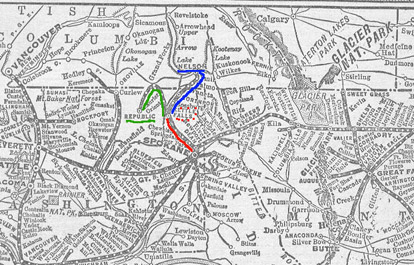
What is known as GN's Kettle Falls Branch had three sections: The original SF & N line from Dean, Washington to Kettle Falls formally Marcus- shown in red; The remanents of Hill's line to the coast between Kettle Falls and Republic- shown in green; and the combined FS&N and N&FS lines from Kettle Falls to Nelson, British Columbia- shown in blue.
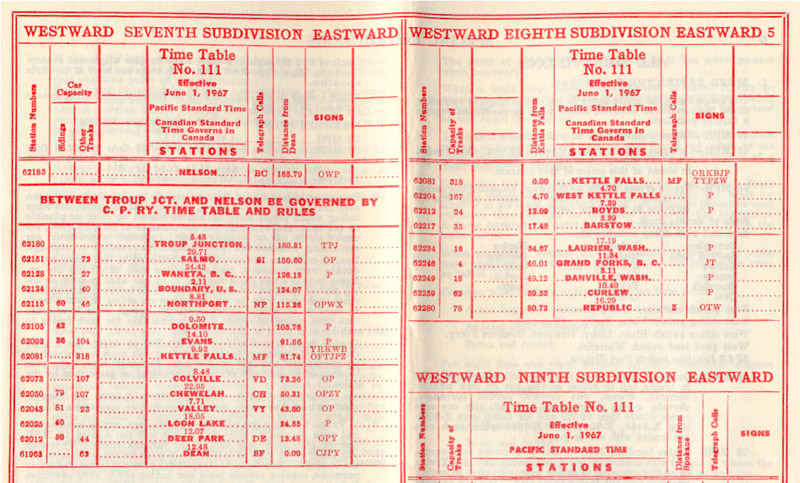
Trains on the branch originated in Spokane and ran North on the mainline to Dean. There they ran to Kettle Falls. At Kettle Falls trains were met by a local for Nelson, BC. The mixed train continued to on the line to Republic, crossing in to British Columbia at Cascade which was across the border from Laurier, Wash. Grand Forks BC was a major town served by both GN and CPR's Kettle Valley line. The GN line then re-entered the Washington at Danville, Wash and continued South to Republic. The Nelson line crossed the border at Northport Washington and terminated at the CPR station and yard in Nelson, BC. |
 |
|
All pictures in Scenes Along the Line are my own and taken in the early 70's unless otherwise noted |
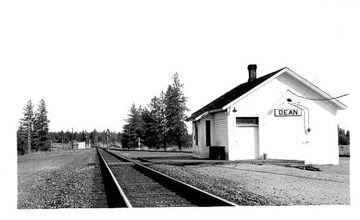
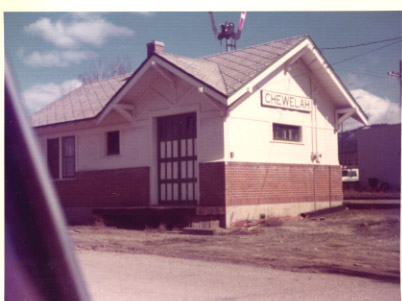
Dean & Chewelah |
The Kettle Falls branch can be seen branching off to the right, behind the depot. Photographer and date unknown |
The original wood depot Chewelah, Washington burned down and was replaced with this structure. Chelewah provided a significant volume of traffic. |
Colville |
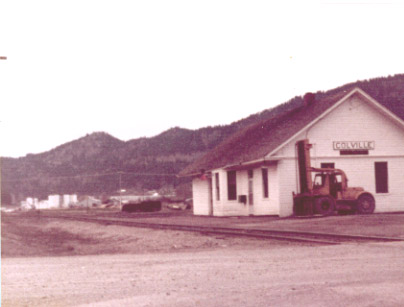
For the area, Colville was a good sized community, that generated traffic for GN. Note the bulk oil dealer in the distance served by rail. |
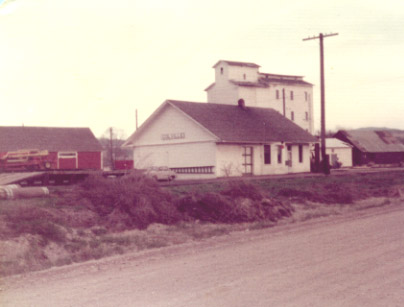
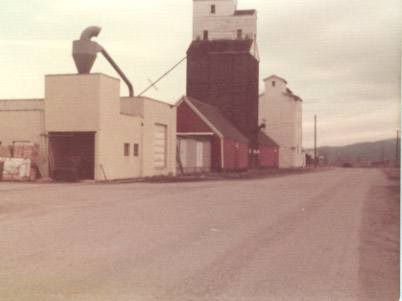
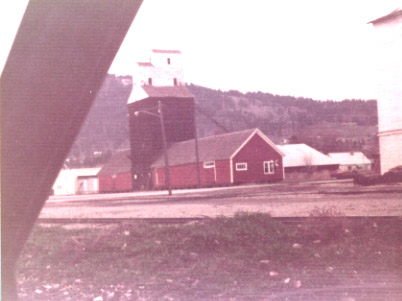
Across from the depot several grain elevators and warehouses were served by GN. |
The siding in front of these building does not show up very well in this picture. |
The elevator and red buildings would make a neat model. |
Kettle Falls |
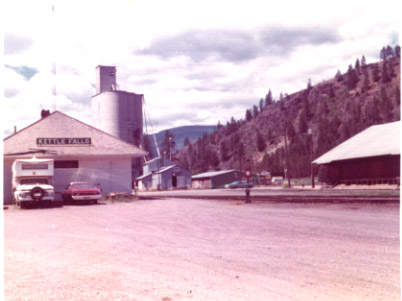
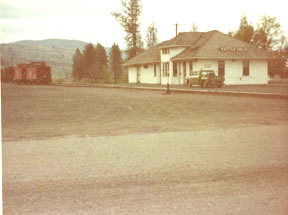
The Kettle Falls depot in 1973. There was a large grain elevator and freight house, both are seen in this picture. |
Two bright red Great Northern cabooses were spotted in front of the Kettle Falls depot in 1973. |
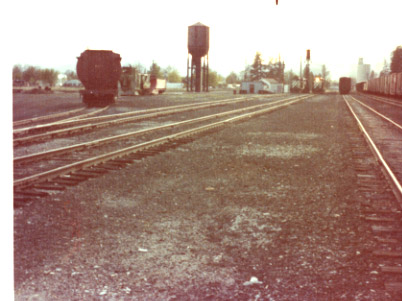
Kettle Falls yard in 1973. The steam era tender was part of the the equipment held to fight forest fires. It is spotted on the east leg of the wye. Beyond it snow plows are stored. Two diesels are in the distance by the sand tower. The depot is beyond them out of sight in this picture. |
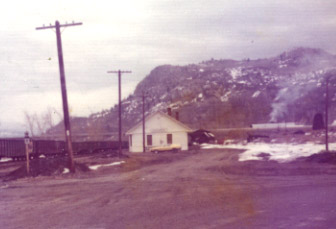
This is the Northport depot in 1976. A string of gondolas are spotted in front of the depot. The smoke in the distance is coming from a saw mill. There was a very neat freight house here built by the SF&N. I loaned my pictures to a friend who died before building his model from the pictures. Sadly, the pictures were lost. |
Between Danville & Republic |
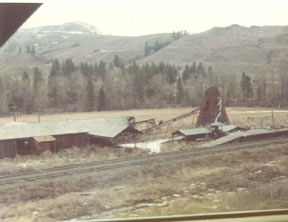
This defunct saw mill was all that remained of Curlew in 1976. Curlew was the junction where the Republic branch split from Great Northern's third mainline. That line swung north to cross into British Columbia at Midway where it met the CPR Kettle Valley line. After Midway the GN line continued west crossing back to Oroville Wash before then swinging back into Canada for the final time. |
Just south of Curlew were stock loading facilities. Stock would be loaded here for the one way trip to the large Spokane slaughter houses. For the trip through Canada between Danville and Laurier, the cars would have green ball seals affixed by Canada Customs on the doors. Canadian cargo transiting the US be sealed with blue ball seals affixed by U.S. Customs. |
Malo was the name of this siding located between Curlew and Republic. There was a a small saw mill and another stock loading facility here. |
Republic |
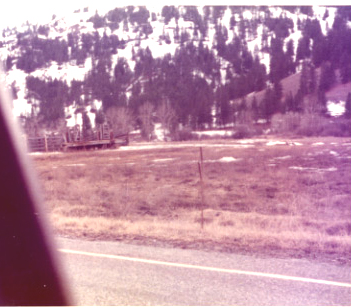
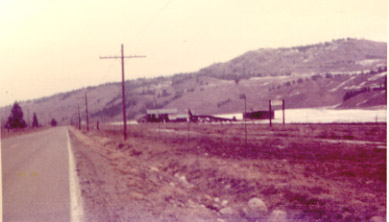
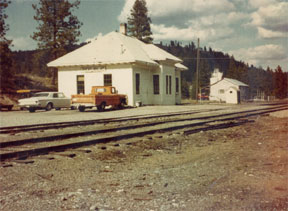
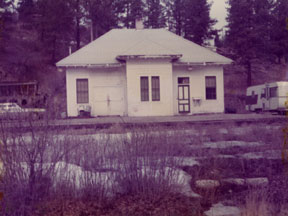
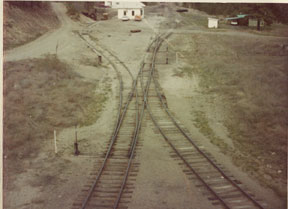
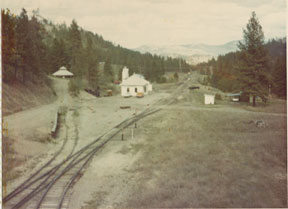
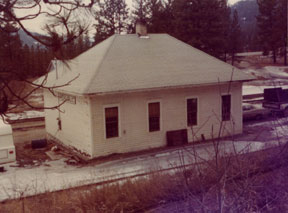
The Rebublic depot on a fall day with a railroad biffy in the distance and feed mill beyond. |
A trackside view of the Rebublic depot in winter with some snow on the ground. |
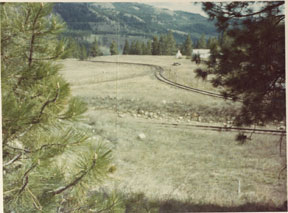
This picture shows the beginings of the wye, used to turn steam locomotives years ago. |
This shot better shows the two earthen loading ramps on the team track running behind the station. Unfortunately the cheap camera I had at the time did not capture the hills in the distance or the large trestle just beyond the depot. |
The south side view, both taken on a snowy winter's day in 1976. |
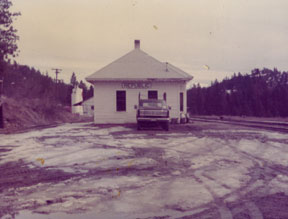
|
Unless noted, photographer date and location unknown |
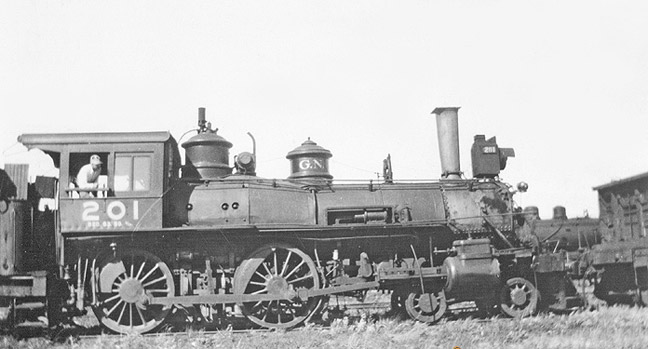
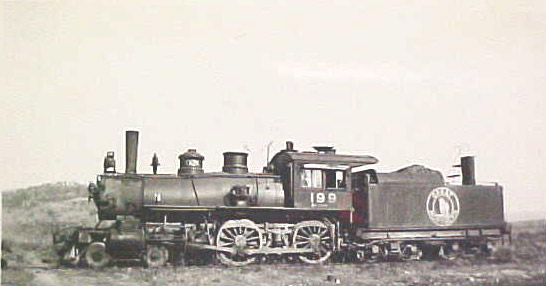
B-class 4-4-0 Americans |
The date and location of the 201 are unknown. It is seen switching a wooden ore car, once a very common sight on the line especially when the mines at Phoenix and Rebublic were in operation. |
The 199, seen here at Hillyard, was one of the last 4-4-0s to work the branch. |
E class Ten Wheelers |
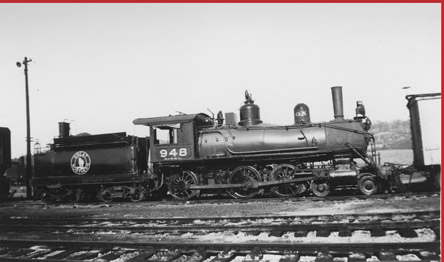 |
GN 948 is seen at Hillyard in the late 40's. The 948 was originally a SF&N ten wheeler that GN acquired when to took over the SF&N. According to Chas. Wood, the SF&N painted its locomotive boilers green and Hill liked it so much he adopted it as the GN standard. |
F-1 Consolidations |
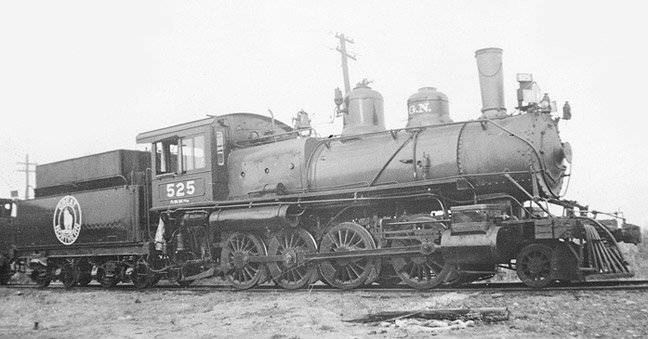
F-1 Consolidations were seen frequently on the Kettle Falls Branch. A freshly painted 525 is switching near Grand Forks, B.C. The consolidation has just been renumbered from 511 to make room for new E-7 diesels arriving from EMD. |
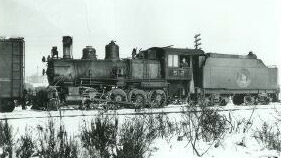
The 512 is pictured switching Chewelah, Washington on a chilly January day in 1947. |
G-3 Twelve wheelers |
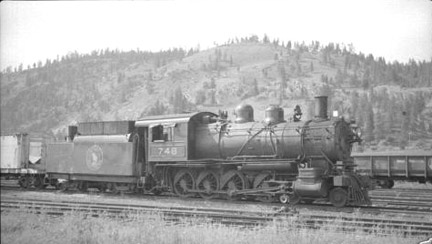
GN 748 quietly simmers in the Kettle Falls yard. The year is 1949 and she's four years away from the scrapper. |
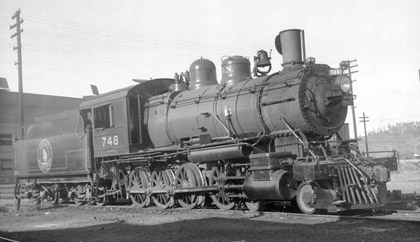
GN 748 parked by the Hillyard roundhouse awaiting its next call to Kettle Falls, date unknown. |
M-2 Mallets |
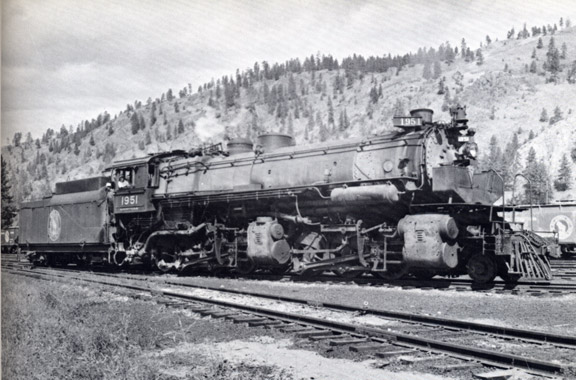
M-2 1951 is passing the west leg of the wye at Kettle Falls in 1947. Kettle Falls had no turntable and the wye, located on the southside of the yard, was used to turn steam locomotives. |